


Botanical terpenes
and their role in HighForest
BOTANICAL RESEARCH. INTENTIONAL FORMULATION. REAL-WORLD EXPERIENCE.
Walk through a pine forest and you'll notice it almost immediately — a sense of uplifting calm that settles in before you've had time to think about why. Part of the answer is chemical: terpenes make up much of what you're breathing in that forest air.
Terpenes are aromatic compounds produced throughout the plant world. They help create the recognizable character of citrus peel, lavender, conifers, herbs, hops, flowers and spices. They have also attracted sustained scientific interest because experimental research has identified a wide range of biological activities among individual terpene compounds.[1]
HighForest combines local unpasteurized honey with carefully selected food-grade botanical terpenes. Each formulation was developed for a different part of the day:
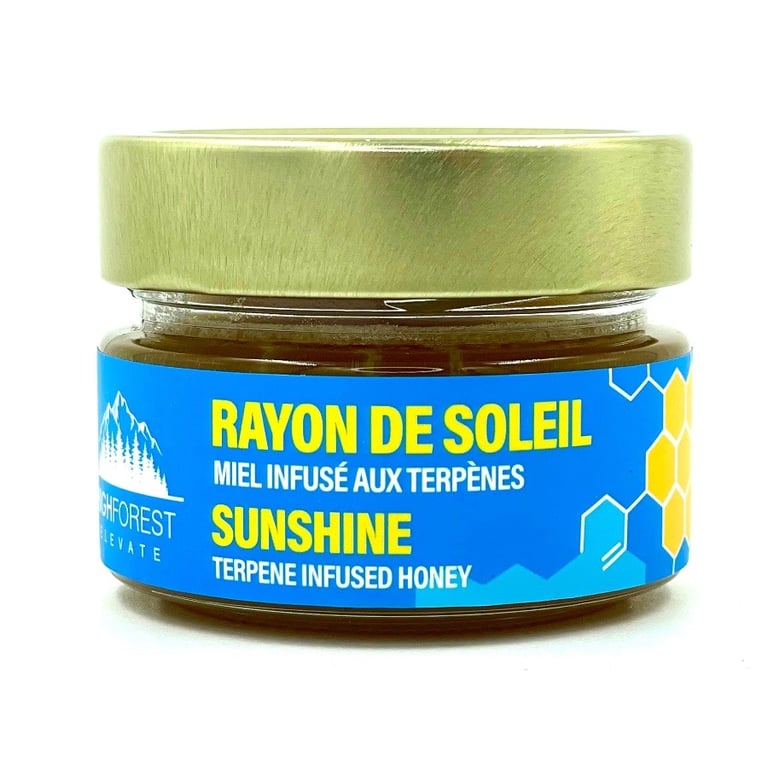
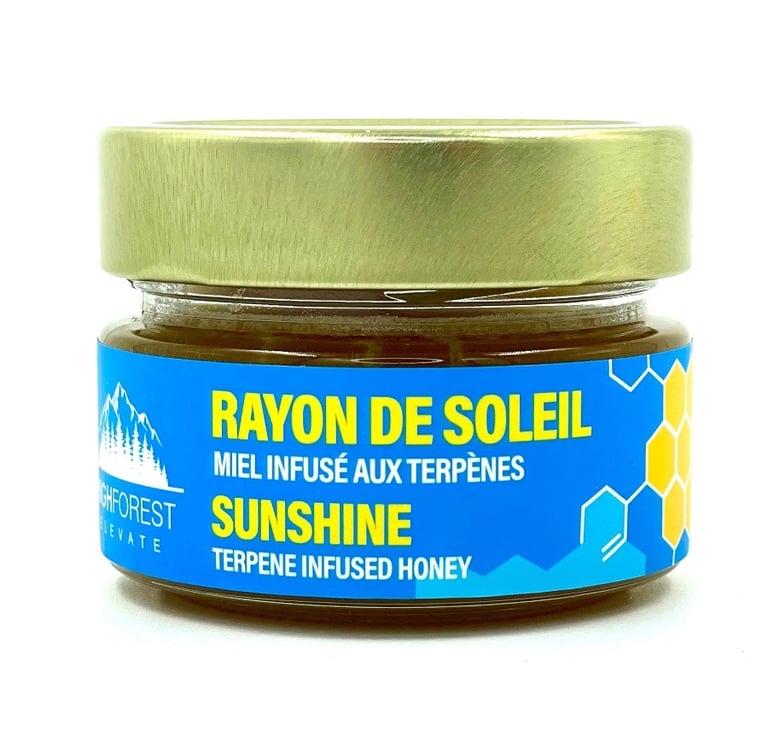
Sunshine - energy for clarity and a fresh start
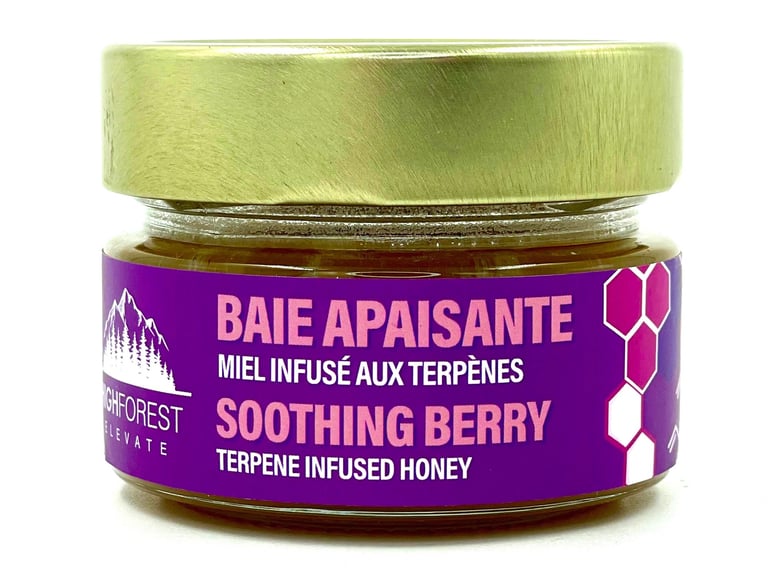
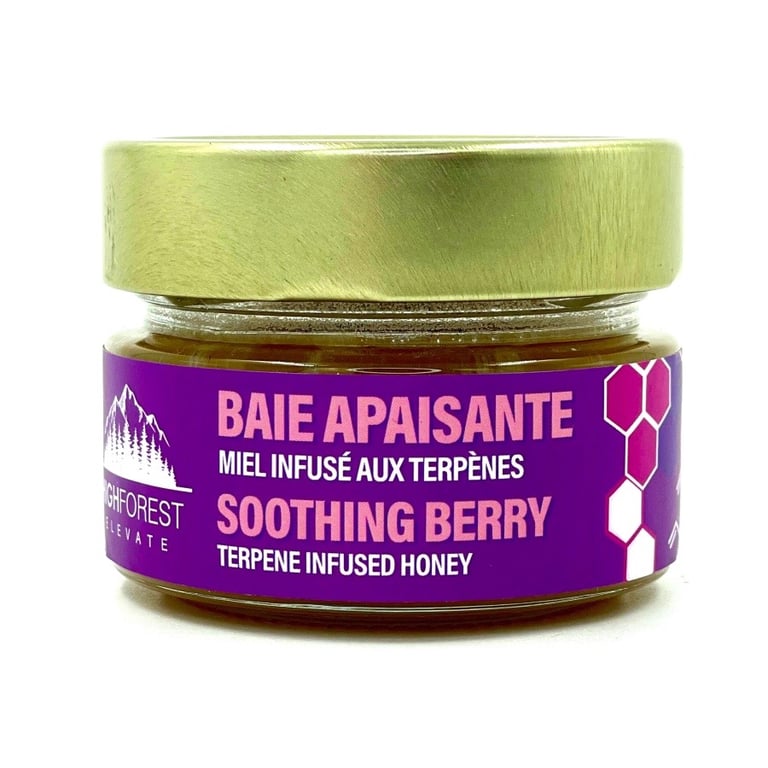
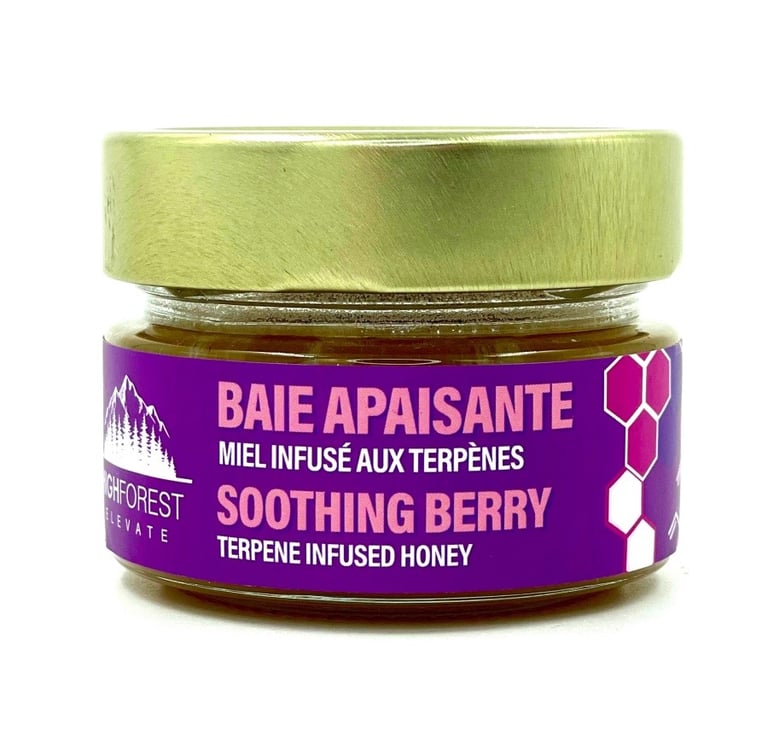
Soothing Berry - energy for calm, balance and focus
Grounding Rest - energy to let go, relax and support restful sleep
The formulas were informed by three connected forms of evidence: published research into the individual terpenes, deliberate formulation around each blend's intended role, and recurring experiences reported by years of HighForest product testers.
What botanical terpenes are
Terpenes are a large family of compounds created from smaller five-carbon units. Plants produce thousands of terpenes and terpene-related structures, ranging from small volatile molecules to much larger compounds.[1]
In precise scientific terminology, compounds made only from carbon and hydrogen are classified as terpenes. Related compounds containing oxygen are often called terpenoids. In food, botanical and fragrance discussions, “terpenes” is commonly used as a practical umbrella term that includes both groups.
This is why a botanical terpene profile may contain:
Hydrocarbon terpenes such as limonene, myrcene and the pinenes
Sesquiterpenes such as beta-caryophyllene and humulene
Oxygenated compounds such as linalool, geraniol and citronellol
Terpenes are best known for aroma and flavor, but they do more within plants. They participate in plant defense, communication, attraction of pollinators and responses to environmental stress. Their chemical diversity is also one reason they have become the subject of extensive biological and pharmacological research.[1][2]
In brief
Botanical terpenes are plant compounds that contribute to aroma and flavor and have measurable biological activities that continue to be investigated in laboratory, animal and human research.


Terpenes in familiar plants and foods
Terpenes are found across the botanical world and in many familiar foods, herbs and spices.
Examples include:
Limonene in citrus peels (lemon, orange, grapefruit, lime, mandarin), juniper berries, peppermint, rosemary, fennel, dill, caraway seeds, celery seeds
Alpha-pinene and beta-pinene in conifers (pine, spruce, fir), rosemary, basil, dill, parsley, eucalyptus, juniper, sage, cannabis, frankincense
Linalool in lavender, coriander, basil, thyme, rosewood, bergamot, jasmine, neroli, ho wood, sweet orange blossom, cinnamon leaf, mint
Myrcene and humulene in hops, mango, thyme, lemongrass, basil, bay laurel, ylang-ylang, parsley, cardamom, cloves, ginger
Beta-caryophyllene in black pepper, cloves, copaiba, basil, oregano, lavender, rosemary, hops, cinnamon leaf, ylang-ylang, carrot seed
Geraniol in rose, geranium, lemongrass, citronella, palmarosa, neroli, bergamot, coriander, carrot, ginger, blueberry
Citronellol in rose, geranium, citronella, lemongrass, eucalyptus, mint, lemon balm, ylang-ylang, palmarosa
Alpha-phellandrene in eucalyptus, dill, fennel, black pepper, cinnamon leaf, grapefruit, parsley, water fennel, star anise, elemi
Terpinolene in conifers (pine, fir), sage, rosemary, apples, cumin, lilac, tea tree, nutmeg, allspice, marjoram
A plant never contains only one terpene. Its aroma and biological profile arise from a complex mixture of compounds produced in different proportions. The number varies significantly by plant, but the research gives us some good benchmarks.
Typical range per plant essence:
Most botanical essential oils contain between 10 and 30 terpenes in their profile
Sweet orange essential oil, for example, contains 16 identified terpenes — a good mid-range example
A highly complex plant like cannabis produces over 200 terpenes, though 8–15 major terpenes typically dominate any given variety's profile


Beyond aroma: Why terpenes receive scientific attention
Terpenes interact with biological systems in ways that extend beyond their contribution to smell and flavor.
Across the scientific literature, individual terpenes have been studied for activity involving:
Inflammatory signaling
Oxidative processes
Pain and sensory pathways
Stress- and mood-related behavior
Sedation and sleep-related behavior
Learning and memory
Microbial growth
Vascular smooth muscle
Cellular proliferation
Receptor and ion-channel activity
Different terpenes act through different mechanisms. Beta-caryophyllene, for example, has been studied for its selective activity at the cannabinoid type 2 receptor, or CB2.[4] Linalool research has examined nervous-system pathways related to calming and sedation.[12][13] Alpha-pinene has been investigated in animal learning and memory models.[7] Citronellol has produced vasorelaxant activity in experimental studies.[18]
This does not mean every terpene has the same activity, that every proposed effect has the same level of evidence or that the findings apply at every dose. It does mean that terpenes are biologically active compounds with a substantial and expanding research base.
HighForest’s formulas were developed with this research in mind.


Why HighForest uses botanical terpenes
HighForest uses botanical terpenes for three connected reasons.
Research-informed wellness properties
The individual terpenes in HighForest have been studied for biological activities relevant to the intended roles of the blends.
These include research related to:
Mood and stress responses
Learning, memory and cognition
Calming and sedative activity
Inflammatory pathways
Pain and physical comfort
Antioxidant and cellular-protective activity
Vascular relaxation
Microbial activity
HighForest reviewed these evidence patterns and selected compounds whose research profiles were relevant to a bright morning formula, a calming and balanced, or powerful night formula.
Intentional formulation for morning, afternoon and evening
The terpenes were not selected as a generic list of popular plant compounds. Each combination was developed around a distinct formulation objective.
Sunshine emphasizes compounds studied in relation to mood, cognition, inflammatory balance and physical vitality.
Soothing Berry combines mood- and cognition-related terpenes with compounds investigated for calming, analgesic and anti-inflammatory activity.
Grounding Rest brings together the strongest calming and sedative evidence in the HighForest ingredient set, supported by compounds studied for comfort, inflammatory balance and vascular relaxation.
The formulas combine several complementary research directions. HighForest does not claim that the compounds have been clinically tested together in these exact combinations. The rationale is that the published evidence for each ingredient provides a credible basis for deliberate formulation.
Botanical aroma and sensory experience
The biological research is central to ingredient selection, and the aroma remains key to access the body's olfactory system. Without a healthy functioning olfactory system, the brain and body will not respond to the experience.
Citrus, pine, floral, herbal, peppery and hop-like notes help give each blend a distinctive identity. Aroma is experienced when the jar is opened, when the honey is tasted and when it is stirred into a warm or cold drink.
The sensory profile reinforces the intended moment:
Bright citrus and coniferous notes for morning
Rounded berry, floral and green notes for afternoon
Strong boreal and piney notes night time
Research, formulation and sensory design work together rather than serving as separate product stories.


How to understand the current research
Much of the research into individual terpenes is preclinical because clinical translation in this field is still developing.
Preclinical evidence can establish important scientific information. It can:
Demonstrate observed biological activity under controlled conditions
Identify receptors, enzymes, signaling pathways and other potential mechanisms
Show whether findings appear consistently across different experimental models
Help researchers understand dose-response relationships
Identify promising directions for human research
Provide a rational evidence base for formulation decisions
Human studies answer additional questions about absorption, dose, effectiveness, safety and whether an outcome is reproduced in a defined population.
The evidence is not uniform. Some HighForest terpenes are supported mainly by cell and animal studies. Others, such as limonene, have limited human pharmacokinetic and biomarker research. Human trials also exist for standardized lavender-oil preparations rich in linalool and other compounds, although those results cannot be assigned to isolated linalool alone.[9][10][14]
Page-level evidence note
The page presents published findings about individual compounds, HighForest’s formulation rationale and recurring customer-reported experiences. These are three distinct but complementary forms of evidence. They provide context for understanding the products but do not promise an identical result for every consumer.
The detailed compound assessments below are based primarily on HighForest’s commissioned evidence review, which prioritized peer-reviewed reviews, primary studies and available human research.


Research behind each terpene
used by HighForest
Beta-caryophyllene
Biological activities studied
Beta-caryophyllene has been studied extensively for anti-inflammatory, analgesic, antioxidant, immunomodulatory and tissue-protective activity. Reviews describe effects across multiple experimental models involving inflammatory signaling and oxidative stress.[3]
One of its most distinctive features is selective activity at the CB2 receptor. In a frequently cited mouse study, orally administered beta-caryophyllene reduced inflammatory and neuropathic pain through CB2-dependent mechanisms.[4]
Beta-caryophyllene is sometimes described in scientific literature as a dietary cannabinoid because of this receptor activity. It is chemically distinct from THC, acts through a different receptor profile and is not intoxicating.
Evidence level
Broad review-level evidence
Multiple cell and animal studies
Strong mechanistic evidence involving CB2
Early and limited human translation
Why HighForest selected it
Beta-caryophyllene provides a well-developed research foundation related to inflammatory balance, pain pathways and physical comfort. It serves as a supporting terpene across all three formulations:
In Sunshine, it complements the cognition- and mood-related morning ingredients with research related to inflammatory and physical balance.
In Soothing Berry, it contributes to the calm-and-comfort formulation rationale.
In Grounding Rest, its analgesic and anti-inflammatory research complements the more directly calming and sedative terpenes.
Aromatic character
Peppery
woody
warm
gently spicy
Research
The review literature and mouse study support a substantial preclinical evidence base for anti-inflammatory and analgesic activity, with a clearly identified CB2-related mechanism.
Research


Humulene
Biological activities studied
Humulene has been investigated for anti-inflammatory, antimicrobial, antiproliferative, antiallergic, gastroprotective, and other biological activities.
A 2024 scoping review assessed 340 papers concerning humulene extraction and biological research. It identified consistent anti-inflammatory activity in rodent models and antiproliferative activity in numerous cell models, while also showing that clinical translation remains limited.[5]
Evidence level
Recent scoping-review evidence
Multiple cell studies
Several animal studies
Particularly coherent preclinical evidence for inflammatory activity
Why HighForest selected it
Humulene contributes a broad experimental research profile related to inflammatory balance and biological resilience.
It supports:
The overall wellness rationale of Sunshine
The balanced comfort profile of Soothing Berry
The grounded, body-oriented character of Grounding Rest
Humulene is not included because it directly creates energy, focus or sleep. It functions as a supporting ingredient within each blend’s broader research-informed design.
Aromatic character
Woody
dry
herbal
hop-like
Research
The scoping review found a substantial preclinical evidence base involving anti-inflammatory, antimicrobial and antiproliferative activity, but no clinical studies of isolated humulene.
Research


Alpha-pinene
Biological activities studied
Alpha-pinene has been studied for anti-inflammatory, antimicrobial, antioxidant, neuroprotective and cognition-related activity.[6]
Animal research has examined alpha-pinene in learning and memory models. In one mouse study, alpha-pinene improved performance following scopolamine-induced learning and memory impairment, with findings associated with cholinergic activity and oxidative processes.[7]
Evidence level
Broad narrative-review evidence
Cell and animal studies
Specific mouse learning and memory research
Why HighForest selected it
Alpha-pinene was selected principally for research related to cognition, memory, inflammatory signaling and neuroprotection.
This makes it especially relevant to:
Sunshine, where cognition-related findings support the clarity and fresh-start rationale
Soothing Berry, where the same research contributes to a calm-but-focused afternoon profile
Aromatic character
Fresh
coniferous
resinous
herbaceous
Research
The pinene review describes broad experimental activity, while the mouse study provides specific evidence related to learning and memory performance under experimentally induced impairment.
Research


Beta-pinene
Biological activities studied
Beta-pinene has been examined for analgesic, anti-inflammatory, antimicrobial, antioxidant and neuroprotective activity.[6]
A rodent study reported antinociceptive activity involving beta-pinene, adding primary experimental support to the pain-related evidence summarized in broader pinene reviews.[8]
Newer experimental research has also examined beta-pinene in cognition and neuroprotection models. “Neuroprotective” or “cognition-related” accurately reflects this evidence.
Evidence level
Narrative-review evidence
Cell and animal studies
Direct rodent antinociceptive research
Why HighForest selected it
Beta-pinene contributes a combination of research related to cognition, neuroprotection, inflammatory balance and physical comfort.
It supports:
The clear, energetic direction of Sunshine
The combination of focus and balance in Soothing Berry
Aromatic character
Green
woody
resinous
pine-like
Research
The strongest formulation-relevant evidence is preclinical and includes antinociceptive, anti-inflammatory, antimicrobial and neuroprotective findings.
Research


Limonene
Biological activities studied
Limonene is one of the most widely recognized citrus terpenes and one of the HighForest ingredients with both substantial preclinical research and limited human research.
Experimental studies have examined limonene for:
Anti-inflammatory activity
Antioxidant activity
Anxiolytic- and antidepressant-like behavior
Cellular and metabolic effects
Tissue distribution and pharmacokinetics
A Phase I study examined oral D-limonene in people with advanced cancer and documented dosing, metabolism, tissue exposure and pharmacokinetics.[9] A later presurgical study found that limonene accumulated in breast tissue and reported a reduction in the tumor biomarker cyclin D1.[10]
A 2024 controlled human laboratory study also reported that vaporized D-limonene reduced acute anxiety associated with THC exposure in healthy adults who intermittently used cannabis.[11]
Evidence level
Substantial preclinical literature
Human pharmacokinetic and tissue-distribution evidence
Early human biomarker research
Controlled human evidence in one specific acute-anxiety context
Why HighForest selected it
Limonene was selected for research related to mood, stress-related behaviour, inflammatory signaling and biological vitality.
It is central to:
Sunshine, where its mood-related research contributes to the bright morning and fresh-start rationale
Soothing Berry, where the research is relevant to a balanced and settled afternoon while its citrus character keeps the formula fresh
Aromatic character
Bright
citrus-like
fresh
lightly sweet
Research
Human studies have established that limonene can be absorbed, metabolized and distributed into tissue, while early biomarker and controlled laboratory findings provide reasons for continued human research.
Research


Linalool
Biological activities studied
Linalool has been studied for anxiolytic, sedative, analgesic, anticonvulsant, anti-inflammatory, neuroprotective and stress-related activity.[12]
In a mouse study, exposure to linalool odor produced anxiolytic-like effects. The researchers found that an intact sense of smell was required for the observed response, demonstrating a specific olfactory contribution rather than a simple assumption based on lavender’s traditional reputation.[13]
Relevant human evidence comes mainly from standardized oral lavender-oil preparations such as Silexan. A 2023 meta-analysis of five randomized, double-blind, placebo-controlled trials reported significant improvements in anxiety outcomes with Silexan compared with placebo.[14]
Silexan is a complete standardized lavender-oil preparation. It contains linalool alongside other constituents. They provide meaningful human context for linalool-rich botanical preparations.
Evidence level
Broad preclinical review evidence
Strong animal evidence for calming and sedative-related activity
Mechanistic olfactory research
Human randomized-trial evidence for a standardized linalool-rich lavender-oil preparation
Why HighForest selected it
Linalool is one of the most directly relevant terpenes to the purpose of Grounding Rest.
Its research profile includes:
Calming and anxiolytic-like activity
Sedative activity
Stress-related mechanisms
Analgesic and anticonvulsant activity
Human evidence from standardized lavender-oil preparations
This makes linalool a central component of the evening formulation rather than simply a source of lavender aroma
Aromatic character
Soft
floral
lavender-like
gently woody
Research
The evidence includes a substantial preclinical literature, a mechanistic mouse study involving linalool odor and a meta-analysis of human trials involving standardized lavender oil.
Research


Myrcene
Biological activities studied
Myrcene has a long research history involving analgesic, anti-inflammatory, antioxidant, anxiolytic-like and sedative activity.
A modern review found that promising biological findings have been reported across numerous animal studies, particularly in relation to pain, inflammation, oxidative processes and nervous-system activity.[15]
Myrcene’s sedative reputation is therefore not based only on traditional descriptions or aroma associations. It is supported by experimental findings, although human studies remain lacking.
Evidence level
Modern narrative-review evidence
Long-standing animal evidence
Particularly relevant preclinical findings involving pain, inflammation and sedation
Limited clinical translation
Why HighForest selected it
Myrcene serves different but related formulation purposes in two blends.
In Soothing Berry, it adds calming and body-oriented research to a profile that also includes brighter cognition- and mood-related terpenes.
In Grounding Rest, its sedative, analgesic and anti-inflammatory research makes it one of the central ingredients supporting relaxation and restful sleep positioning.
Aromatic character
Earthy
herbal
balsamic
hop-like
gently fruity
Research
The review literature and mouse study support a substantial preclinical evidence base for anti-inflammatory and analgesic activity, with a clearly identified CB2-related mechanism.
Research


Terpinolene
Biological activities studied
Terpinolene has been studied for sedative, antiproliferative and context-dependent antioxidant activity.
In a mouse study, inhaled terpinolene reduced locomotor activity, providing direct experimental evidence of a sedative effect. The study also investigated structural relationships that may contribute to this activity.[16]
Cell studies have examined antiproliferative effects. Antioxidant findings vary with concentration and experimental conditions, so a simple claim that terpinolene is always antioxidant would be incomplete.
Evidence level
Direct mouse sedation study
Cell-based antiproliferative research
Context-dependent antioxidant findings
Limited evidence for strong isolated antibacterial activity
Why HighForest selected it
Terpinolene was selected for Grounding Rest because its most relevant primary evidence involves sedative activity.
It complements:
Myrcene’s sedative and analgesic research
Linalool’s calming and sedative research
The comfort-oriented evidence associated with beta-caryophyllene and humulene
Aromatic character
Fresh
herbal
softly pine-like
lightly floral
Research
The strongest direct formulation-relevant evidence is the mouse study reporting reduced locomotor activity following inhaled terpinolene.
Research


Geraniol
Biological activities studied
Geraniol has been examined for anti-inflammatory, antioxidant, antimicrobial, antifungal, antinociceptive and cellular-protective activity.
A peer-reviewed pharmacology review summarizes findings across experimental systems, including effects involving inflammatory pathways, oxidative stress and microbial activity.[17]
Geraniol has also been studied extensively as a skin-penetration enhancer in pharmaceutical research. That application demonstrates a well-developed physicochemical research base.
Evidence level
Broad narrative-review evidence
Multiple cell and animal studies
Well-developed pharmaceutical research in topical delivery
Limited clinical evidence for ingested geraniol
Why HighForest selected it
Geraniol contributes research related to inflammatory balance, oxidative processes and biological resilience.
In Sunshine, it broadens the morning formula beyond cognition and mood by adding anti-inflammatory and antioxidant research.
In Soothing Berry, it contributes to the balanced wellness rationale alongside limonene, myrcene, the pinenes, beta-caryophyllene and humulene.
Aromatic character
Floral
rose-like
softly citrus-like
sweet
Research
The review describes broad preclinical activity involving inflammation, oxidation, microbial growth and tissue-protective mechanisms.
Research


Citronellol
Biological activities studied
Citronellol has been studied for anti-inflammatory, antinociceptive, vasorelaxant, hypotensive and antitumor activity in experimental models.
In a rat study, citronellol produced hypotensive and vasorelaxant effects through direct action on vascular smooth muscle.[18] Other animal studies summarized in the commissioned review have reported anti-inflammatory and pain-related activity.
These findings support discussion of vascular relaxation in experimental research.
Evidence level
Direct animal vascular research
Additional rodent anti-inflammatory and antinociceptive findings
Cell-based antitumor research
Why HighForest selected it
Citronellol contributes an experimental research direction related to relaxation of vascular smooth muscle, inflammatory balance and physical comfort.
In Sunshine, it supports a wider vitality and balance rationale.
In Grounding Rest, its vasorelaxant and comfort-related research complements the more directly sedative evidence associated with myrcene, linalool and terpinolene.
Found in
Sunshine
Grounding Rest
Aromatic character
Rosy
citrus-like
fresh
softly green
Research
The direct vascular evidence comes from rats and isolated tissue, where citronellol produced relaxation of vascular smooth muscle.
Research


Alpha-phellandrene
Biological activities studied
Alpha-phellandrene has been examined for antinociceptive, anti-inflammatory, antimicrobial, antifungal, antitumor, insecticidal and larvicidal activity.
A 2022 systematic review evaluated research on isolated alpha-phellandrene and alpha-phellandrene-rich essential oils. Studies of the pure compound reported promising antitumor, antinociceptive and other biological activity, while also identifying major gaps in toxicological and human research.[19]
Evidence level
Systematic review
Cell and animal research
Research involving both the isolated compound and complex essential oils
Why HighForest selected it
Alpha-phellandrene contributes preclinical research related to inflammatory pathways, pain perception and microbial activity.
In Sunshine, it supports the broader wellness rationale while contributing a fresh sensory character.
In Grounding Rest, its antinociceptive and anti-inflammatory research complements the blend’s more directly calming and sedative components.
Aromatic character
Fresh
green
citrus-like
lightly peppery
Research
The systematic review supports preclinical antitumor, antinociceptive and antimicrobial-related activity.
Research


Why each HighForest blend uses a different terpene profile
Each blend combines several research directions around a specific part of the day.
The ingredients were not chosen because one terpene is an “energy terpene” and another is a “sleep terpene.” Biological activity is more complex than a one-compound, one-effect model.
HighForest instead developed profiles that bring together complementary areas of research.
Sunshine
MORNING: ENERGY, CLARITY AND A FRESH START
Sunshine was developed as a bright morning formula centered on research involving mood, cognition, inflammatory balance and physical vitality.
How the terpene profile supports the formulation
Beta-caryophyllene was selected for its CB2-related, analgesic and anti-inflammatory evidence supports the blend’s broader physical-wellness rationale.[3][4]
Alpha-pinene was selected for its research involving learning, memory, neuroprotection and inflammatory activity. Its cognition-related evidence is especially relevant to Sunshine’s clarity positioning.[6][7]
Beta-pinene was selected for its neuroprotection, pain pathways, inflammation and oxidative processes.[6][8]
Limonene contributes preclinical mood-related and anti-inflammatory research, supported by limited human pharmacokinetic, biomarker and controlled laboratory evidence.[9][10][11]
Geraniol was selected for its inflammatory signalling, antioxidant activity and biological protection.[17]
Citronellol was selected for its vascular-relaxation, anti-inflammatory and antinociceptive findings.[18]
Alpha-phellandrene was selected for its antinociceptive, anti-inflammatory and antimicrobial-related research.[19]
Humulene was selected for its inflammatory and other biological activity.[5]
Together, these compounds create a morning profile informed by cognition-related research, mood-related findings and broader biological activity associated with physical balance and vitality.
Aromatic profile
Limonene and the pinenes create a bright citrus and coniferous opening. Alpha-phellandrene adds fresh green character. Geraniol and citronellol soften the profile with floral-citrus notes, while beta-caryophyllene and humulene provide subtle woody and herbal depth.
Soothing Berry
AFTERNOON: CALM, BALANCE AND FOCUS
Soothing Berry was developed for the middle of the day, when people may want to settle without losing clarity.
Its formulation combines terpenes studied for mood and cognition with compounds investigated for calming, analgesic, anti-inflammatory and antioxidant activity.
How the terpene profile supports the formulation
Limonene was selected for its mood-related behavior, stress responses and inflammatory pathways.[9][10][11]
Beta-pinene complements alpha-pinene with neuroprotective, antinociceptive and anti-inflammatory findings.[6][8]
Myrcene was selected for its analgesic, anti-inflammatory, anxiolytic-like and sedative activity.[15]
Geraniol was selected for its antioxidant, anti-inflammatory and antimicrobial research.[17]
Alpha-pinene was selected for its cognition and memory-related research that supports the focus component of the afternoon profile.[6][7]
Beta-caryophyllene was selected for its CB2-related, analgesic and anti-inflammatory evidence that supports comfort and balance.[3][4]
Humulene was selected for its inflammatory and biological-regulation pathways.[5]
The formula was designed to balance two objectives: helping the afternoon feel calmer while maintaining the clear, focused character associated with the pinenes and limonene.
Aromatic profile
Limonene and the pinenes create a fresh opening. Geraniol adds floral roundness. Myrcene, beta-caryophyllene and humulene provide deeper herbal, berry-compatible and gently woody notes.

Grounding Rest
EVENING: LET GO, RELAX AND SUPPORT RESTFUL SLEEP
Grounding Rest was developed around the most coherent calming and sedative research found among the HighForest terpenes.
Its formulation centers on myrcene, linalool and terpinolene, supported by compounds studied for analgesic, anti-inflammatory, antinociceptive and vasorelaxant activity.
How the terpene profile supports the formulation
Myrcene was selected for its analgesic, anti-inflammatory, anxiolytic-like and sedative activity.[15]
Linalool was selected for its anxiolytic-like and sedative effects.[12][13][14]
Humulene was selected for its anti-inflammatory and body-oriented preclinical research.[5]
Beta-caryophyllene was selected for its CB2-related, analgesic and anti-inflammatory evidence that supports comfort and balance.[3][4]
Alpha-phellandrene was selected for its antinociceptive and anti-inflammatory activity.[19]
Citronellol was selected for its vasorelaxant, antinociceptive and anti-inflammatory findings.[18]
Terpinolene was selected for its sedative activity following inhalation.[16]
Together, the profile brings calming and sedative research into the foreground while also addressing physical relaxation and comfort. This evidence pattern provides the formulation rationale for Grounding Rest’s role at the end of the day.
Aromatic profile
Myrcene, humulene and beta-caryophyllene create an earthy, herbal and hop-like foundation. Linalool and citronellol add a softer floral dimension. Terpinolene and alpha-phellandrene provide fresh green and balsamic notes that keep the blend layered.


What HighForest Customers Report
Published ingredient research explains why the terpenes were selected. Formulation rationale explains how the compounds were combined. Customer and product-tester experience provides a third form of evidence: how people describe the finished products in real-world use.
HighForest products have been experienced by hundreds of customers over the last 2 years.
Feedback has been collected through Google reviews, direct customer messages, and retailer feedback
Across that feedback, recurring themes include:
Sunshine
Customers and testers have described:
A brighter morning experience
A sense of renewed energy
Greater freshness or clarity
Feeling more ready to begin the day
Grounding Rest
Customers and testers have described:
Deeper relaxation
Finding it easier to let go at the end of the day
Improved sleep
A more settled evening routine
Soothing Berry
Customers and testers have described:
Feeling calmer during the afternoon
A more balanced state
Maintaining focus without feeling overstimulated
Enjoying a steady pause during a busy day


Food-grade sourcing and careful formulation
HighForest products are conventional food products made with unpasteurized honey and food-grade botanical terpenes.
HighForest selects botanical terpenes from qualified suppliers and reviews ingredient documentation before a terpene is approved for use.
The sourcing and formulation process considers:
Ingredient identity
Purity and specification
Suitability for the intended use in food
Supplier quality documentation
Certificate-of-analysis information
Storage and handling
Batch consistency
Final concentration in the blend
Interaction with the flavor and character of the selected honey
Each formula is produced according to a controlled recipe so that the relationship among the individual terpenes remains consistent from batch to batch.
The honey also contributes materially to each product. Sunshine uses a bright summer honey, Soothing Berry uses wild blueberry blossom honey and Grounding Rest uses a deeper buckwheat honey. The honey’s flavor, texture, botanical origin and naturally occurring compounds become part of the finished formulation.


FAQ
What does food-grade mean?
Food-grade means an ingredient is manufactured and documented specifically for use in food. HighForest sources its botanical terpenes from True Terpenes, whose products are formulated in cGMP facilities certified to ISO 9001:2015 and FSSC 22000 standards. Each batch passes through a quality release program that includes GC-MS terpene analysis and third-party lab testing for residual solvents, pesticide residue and heavy metals. Certificates of Analysis and Safety Data Sheets are available for every product, and HighForest reviews this documentation before a terpene is approved for use in a formulation.
What are botanical terpenes?
Botanical terpenes are compounds produced by plants. Many contribute to aroma and flavor, and individual terpenes have also demonstrated biological activity in laboratory and animal research. A smaller number have been examined in human studies.
Why does HighForest add terpenes to honey?
HighForest selected terpenes for three connected reasons: their researched biological activities, their relevance to the intended morning, afternoon or evening role of each blend, and their botanical aroma and sensory character.
Is terpene research only preclinical?
Most biological research involving the individual HighForest terpenes is preclinical, but the evidence base is not limited to one type of study. It includes peer-reviewed reviews, cell research, animal studies, mechanistic research and a smaller number of human studies.
Limonene has been examined in human pharmacokinetic, tissue-distribution and controlled laboratory studies. Human randomized trials also exist for standardized lavender-oil preparations containing linalool and other constituents.
Does research on individual terpenes establish the effect of a HighForest blend?
Research on the individual compounds explains why HighForest selected them and how the formulations were developed. Customer and tester feedback provides separate real-world information about the finished blends. Neither evidence type guarantees the same response for every person.
Which terpenes have the strongest calming or sedative research?
Within the HighForest ingredient set, linalool, myrcene and terpinolene have particularly relevant calming or sedative findings in experimental research. Human evidence related to standardized lavender-oil preparations provides additional context for linalool-rich botanical products.
Which terpenes informed Sunshine’s clarity positioning?
Alpha-pinene has been examined directly in animal learning and memory models. Broader pinene research includes neuroprotective and cognition-related activity. Limonene also contributes mood-related and anti-inflammatory research relevant to Sunshine’s morning rationale.
Are terpenes only found in cannabis?
No. Terpenes are found throughout the plant world, including in citrus fruits, conifers, lavender, rosemary, hops, herbs, flowers and spices.
Does HighForest contain cannabis, THC or CBD?
No. HighForest contains no cannabis, THC or CBD and has no intoxicating ingredients.
What can preclinical terpene research tell us?
Preclinical research can identify biological activity, potential mechanisms, consistency across experimental models, dose-response relationships and promising directions for human study. It can also provide a rational basis for ingredient selection and product formulation.
What do HighForest customers report?
“It really helps with relaxation and improved sleep. I often lack energy, but since I started using it, I’ve noticed renewed energy in my daily life.”
translated from French
Mame Oumy Cissé — Google Review,
“I can’t get enough of it. This line not only satisfies with flavour but actually provides noticeable changes in bodily sensations. Sunshine is my favourite—it elevates and rebalances my senses even when I’m tired or feeling out of sorts.”
21stCenturyWeaver — Google Review
“A wholesome sedative action! Thank you. I highly recommend these products.”
Jaisri Lambert — Google Review
“The base honeys taste delicious and of high quality. The terpenes add to the natural flavour of the honeys without being overbearing or out of place.”
Zaché Hall — Google Review
"I love these products! Original and well done. I like the variety and am able to choose in the moment. The taste is marvellous."
Jeen Kirwen — Google Review,
"Great product I highly recommend it thx high forest"
Paul Weldon — Google Review,
Complete linked references
General terpene science
Beta-caryophyllene
Humulene
Alpha-pinene and beta-pinene
[6] “Therapeutic Potential of Alpha- and Beta-Pinene: A Miracle Gift of Nature.”
[7] “Amelioration of Scopolamine-Induced Learning and Memory Impairment by Alpha-Pinene in C57BL/6 Mice.”
Limonene
[9] “Phase I and Pharmacokinetic Study of D-Limonene in Patients with Advanced Cancer.”
[10] “Human Breast Tissue Disposition and Bioactivity of Limonene in Women with Early-Stage Breast Cancer.”
Linalool and lavender oil
[14] “Efficacy of Silexan in Patients with Anxiety Disorders: A Meta-Analysis of Randomized, Placebo-Controlled Trials.”
Myrcene
Terpinolene
Geraniol
Citronellol
Alpha-phellandrene